Flutter for OpenHarmony 实战:视差滚动效果实现
欢迎加入开源鸿蒙跨平台社区: https://openharmonycrossplatform.csdn.net
前言:跨生态开发的新机遇
在移动开发领域,我们总是面临着选择与适配。今天,你的Flutter应用在Android和iOS上跑得正欢,明天可能就需要考虑一个新的平台:HarmonyOS(鸿蒙)。这不是一道选答题,而是很多团队正在面对的现实。
Flutter的优势很明确——写一套代码,就能在两个主要平台上运行,开发体验流畅。而鸿蒙代表的是下一个时代的互联生态,它不仅仅是手机系统,更着眼于未来全场景的体验。将现有的Flutter应用适配到鸿蒙,听起来像是一个“跨界”任务,但它本质上是一次有价值的技术拓展:让产品触达更多用户,也让技术栈覆盖更广。
不过,这条路走起来并不像听起来那么简单。Flutter和鸿蒙,从底层的架构到上层的工具链,都有着各自的设计逻辑。会遇到一些具体的问题:代码如何组织?原有的功能在鸿蒙上如何实现?那些平台特有的能力该怎么调用?更实际的是,从编译打包到上架部署,整个流程都需要重新摸索。
这篇文章想做的,就是把这些我们趟过的路、踩过的坑,清晰地摊开给你看。我们不会只停留在“怎么做”,还会聊到“为什么得这么做”,以及“如果出了问题该往哪想”。这更像是一份实战笔记,源自真实的项目经验,聚焦于那些真正卡住过我们的环节。
无论你是在为一个成熟产品寻找新的落地平台,还是从一开始就希望构建能面向多端的应用,这里的思路和解决方案都能提供直接的参考。理解了两套体系之间的异同,掌握了关键的衔接技术,不仅能完成这次迁移,更能积累起应对未来技术变化的能力。
混合工程结构深度解析
项目目录架构
当Flutter项目集成鸿蒙支持后,典型的项目结构会发生显著变化。以下是经过ohos_flutter插件初始化后的项目结构:
my_flutter_harmony_app/
├── lib/                          # Flutter业务代码(基本不变)
│   ├── main.dart                 # 应用入口
│   ├── home_page.dart           # 首页
│   └── utils/
│       └── platform_utils.dart  # 平台工具类
├── pubspec.yaml                  # Flutter依赖配置
├── ohos/                         # 鸿蒙原生层(核心适配区)
│   ├── entry/                    # 主模块
│   │   └── src/main/
│   │       ├── ets/              # ArkTS代码
│   │       │   ├── MainAbility/
│   │       │   │   ├── MainAbility.ts       # 主Ability
│   │       │   │   └── MainAbilityContext.ts
│   │       │   └── pages/
│   │       │       ├── Index.ets           # 主页面
│   │       │       └── Splash.ets          # 启动页
│   │       ├── resources/        # 鸿蒙资源文件
│   │       │   ├── base/
│   │       │   │   ├── element/  # 字符串等
│   │       │   │   ├── media/    # 图片资源
│   │       │   │   └── profile/  # 配置文件
│   │       │   └── en_US/        # 英文资源
│   │       └── config.json       # 应用核心配置
│   ├── ohos_test/               # 测试模块
│   ├── build-profile.json5      # 构建配置
│   └── oh-package.json5         # 鸿蒙依赖管理
└── README.md
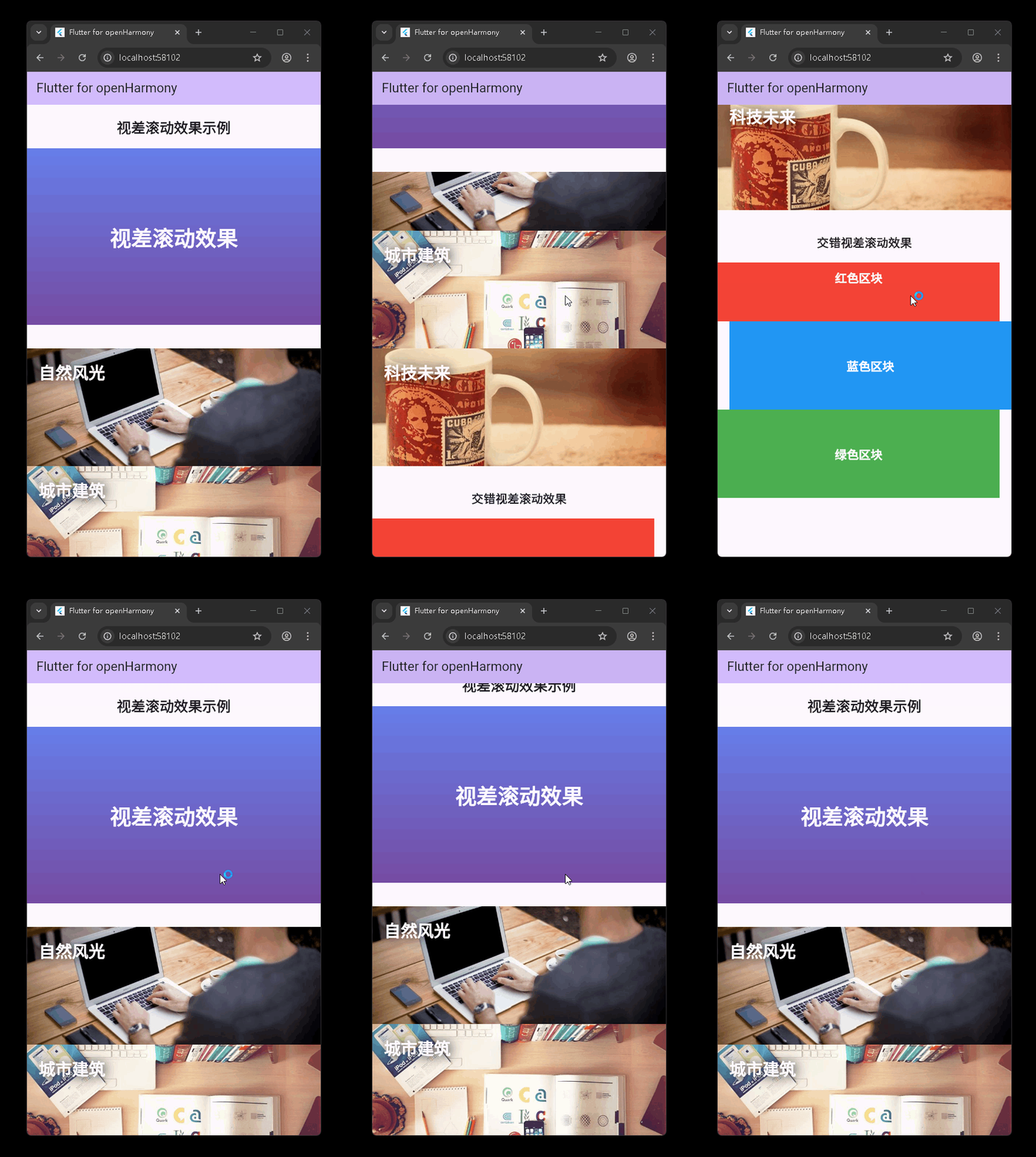
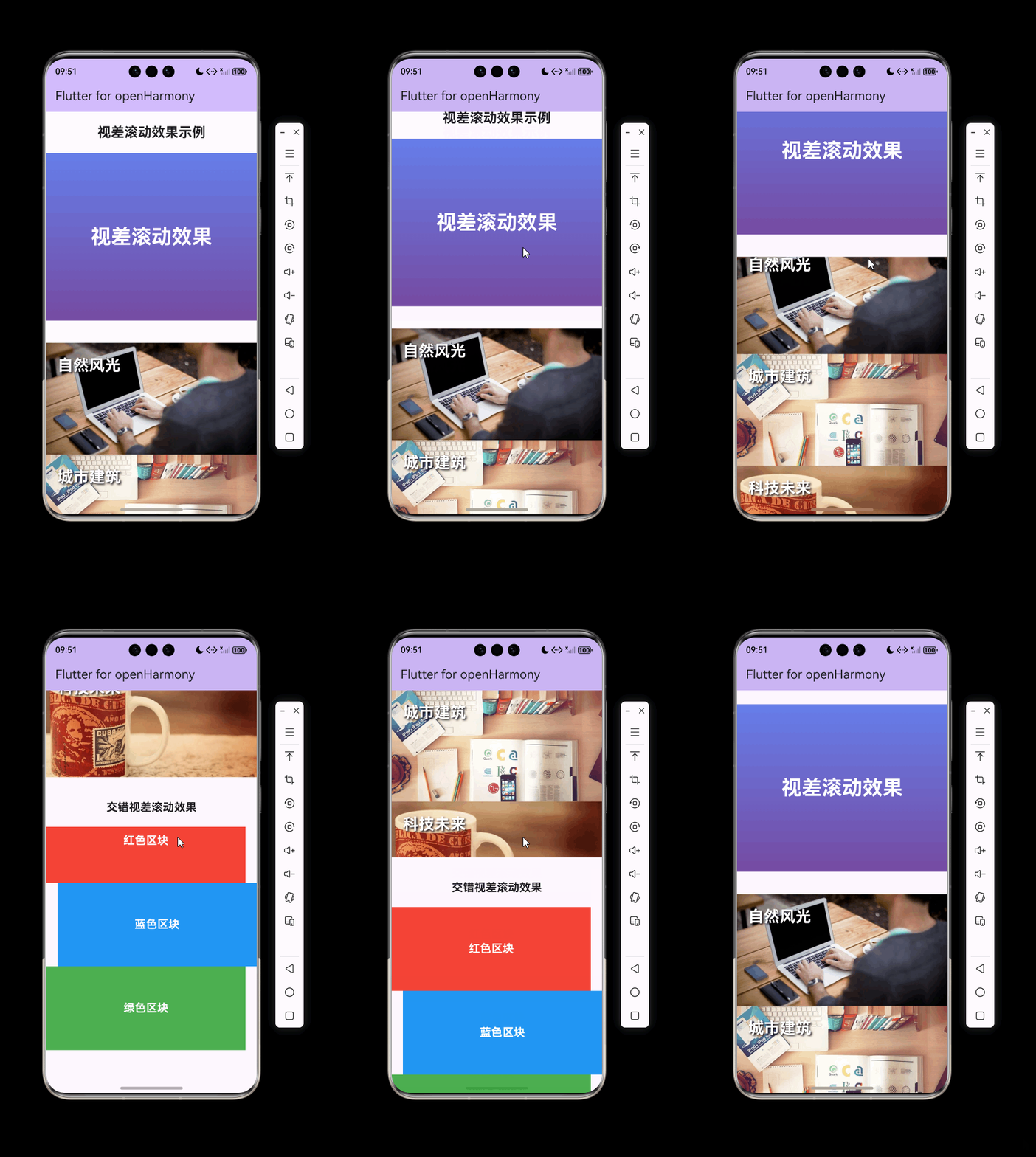
展示效果图片
flutter 实时预览 效果展示
运行到鸿蒙虚拟设备中效果展示
目录
功能代码实现
视差滚动组件设计与实现
ParallaxItem 数据模型
ParallaxItem 是视差滚动效果的核心数据模型,用于封装每个视差项的背景、前景、高度和视差因子等属性。通过这个数据模型,我们可以灵活配置每个视差项的表现。
class ParallaxItem {
  final Widget background;
  final Widget foreground;
  final double height;
  final double parallaxFactor;

  const ParallaxItem({
    required this.background,
    required this.foreground,
    this.height = 300,
    this.parallaxFactor = 0.5,
  });
}
使用方法:
background:背景组件,通常是图片、渐变或其他装饰性元素foreground:前景组件,通常是文本、按钮或其他交互元素height:每个视差项的高度,默认值为300parallaxFactor:视差因子,控制背景移动速度与滚动速度的比例,默认值为0.5
ParallaxScrollView 组件
ParallaxScrollView 是一个可滚动的视差列表组件,用于展示多个视差项。它基于 ListView.builder 实现,提供了高效的懒加载机制。
class ParallaxScrollView extends StatefulWidget {
final List<ParallaxItem> items;
final ScrollController? controller;
final bool shrinkWrap;
final EdgeInsets padding;
const ParallaxScrollView({
Key? key,
required this.items,
this.controller,
this.shrinkWrap = false,
this.padding = EdgeInsets.zero,
}) : super(key: key);
State<ParallaxScrollView> createState() => _ParallaxScrollViewState();
}
class _ParallaxScrollViewState extends State<ParallaxScrollView> {
late ScrollController _controller;
void initState() {
super.initState();
_controller = widget.controller ?? ScrollController();
}
void dispose() {
if (widget.controller == null) {
_controller.dispose();
}
super.dispose();
}
Widget build(BuildContext context) {
return ListView.builder(
controller: _controller,
shrinkWrap: widget.shrinkWrap,
padding: widget.padding,
itemCount: widget.items.length,
itemBuilder: (context, index) {
return ParallaxListItem(
item: widget.items[index],
index: index,
controller: _controller,
);
},
);
}
}
核心设计:
- 支持外部传入 ScrollController,方便与其他滚动组件协调
- 实现了控制器的生命周期管理,避免内存泄漏
- 使用 ListView.builder 提高滚动性能
ParallaxListItem 组件
ParallaxListItem 是单个视差项的实现,负责计算和应用视差效果。这是视差滚动的核心实现组件。
class ParallaxListItem extends StatefulWidget {
final ParallaxItem item;
final int index;
final ScrollController controller;
const ParallaxListItem({
Key? key,
required this.item,
required this.index,
required this.controller,
}) : super(key: key);
State<ParallaxListItem> createState() => _ParallaxListItemState();
}
class _ParallaxListItemState extends State<ParallaxListItem> {
late double _offset;
void initState() {
super.initState();
_offset = 0.0;
widget.controller.addListener(_updateOffset);
}
void _updateOffset() {
setState(() {
// 简化的视差计算方法
_offset = widget.controller.offset * widget.item.parallaxFactor;
});
}
void dispose() {
widget.controller.removeListener(_updateOffset);
super.dispose();
}
Widget build(BuildContext context) {
return Container(
height: widget.item.height,
child: Stack(
children: [
Transform.translate(
offset: Offset(0, -_offset),
child: widget.item.background,
),
Container(
padding: const EdgeInsets.all(20),
child: widget.item.foreground,
),
],
),
);
}
}
实现原理:
- 通过 ScrollController 监听滚动事件
- 根据滚动偏移量和视差因子计算背景移动的偏移量
- 使用 Transform.translate 应用偏移效果,实现背景与前景的相对运动
- 通过 Stack 布局叠加背景和前景组件
开发注意事项:
- 必须在 dispose 方法中移除滚动监听器,避免内存泄漏
- 视差因子的取值范围通常在 0-1 之间,值越大,视差效果越明显
- 对于复杂的背景,需要考虑性能优化
ParallaxHeader 组件
ParallaxHeader 是一个视差滚动头部组件,通常用于页面顶部的大型背景图或横幅。它的实现与 ParallaxListItem 类似,但专注于头部区域的视差效果。
class ParallaxHeader extends StatefulWidget {
final Widget background;
final Widget foreground;
final double height;
final double parallaxFactor;
final ScrollController controller;
const ParallaxHeader({
Key? key,
required this.background,
required this.foreground,
this.height = 400,
this.parallaxFactor = 0.5,
required this.controller,
}) : super(key: key);
State<ParallaxHeader> createState() => _ParallaxHeaderState();
}
class _ParallaxHeaderState extends State<ParallaxHeader> {
late double _offset;
void initState() {
super.initState();
_offset = 0.0;
widget.controller.addListener(_updateOffset);
}
void _updateOffset() {
setState(() {
_offset = -widget.controller.offset * widget.parallaxFactor;
});
}
void dispose() {
widget.controller.removeListener(_updateOffset);
super.dispose();
}
Widget build(BuildContext context) {
return Container(
height: widget.height,
child: Stack(
children: [
Transform.translate(
offset: Offset(0, _offset),
child: widget.background,
),
Container(
padding: const EdgeInsets.all(20),
child: widget.foreground,
),
],
),
);
}
}
特点:
- 专门为页面头部设计,通常高度较大
- 背景移动方向与 ParallaxListItem 相反,营造出层次感
- 适合展示品牌标语、大型图片等内容
StaggeredParallaxList 组件
StaggeredParallaxList 是一个交错排列的视差滚动列表,通过左右偏移创建交错效果,增加视觉趣味性。
class StaggeredParallaxList extends StatefulWidget {
final List<ParallaxItem> items;
final ScrollController? controller;
final bool shrinkWrap;
final EdgeInsets padding;
const StaggeredParallaxList({
Key? key,
required this.items,
this.controller,
this.shrinkWrap = false,
this.padding = EdgeInsets.zero,
}) : super(key: key);
State<StaggeredParallaxList> createState() => _StaggeredParallaxListState();
}
class _StaggeredParallaxListState extends State<StaggeredParallaxList> {
late ScrollController _controller;
void initState() {
super.initState();
_controller = widget.controller ?? ScrollController();
}
void dispose() {
if (widget.controller == null) {
_controller.dispose();
}
super.dispose();
}
Widget build(BuildContext context) {
return ListView.builder(
controller: _controller,
shrinkWrap: widget.shrinkWrap,
padding: widget.padding,
itemCount: widget.items.length,
itemBuilder: (context, index) {
final item = widget.items[index];
return Container(
height: item.height,
margin: EdgeInsets.only(
left: index % 2 == 0 ? 0 : 20,
right: index % 2 == 1 ? 0 : 20,
),
child: ParallaxListItem(
item: item,
index: index,
controller: _controller,
),
);
},
);
}
}
实现特点:
- 通过索引的奇偶性来决定左右偏移
- 复用了 ParallaxListItem 的视差效果实现
- 创造出更具动感的列表布局
首页集成实现
将视差滚动组件集成到首页,直接展示效果。以下是完整的首页实现代码:
import 'package:flutter/material.dart';
import 'parallax_widgets.dart';
void main() {
runApp(const MyApp());
}
class MyApp extends StatelessWidget {
const MyApp({super.key});
Widget build(BuildContext context) {
return MaterialApp(
title: 'Flutter for openHarmony',
theme: ThemeData(
colorScheme: ColorScheme.fromSeed(seedColor: Colors.deepPurple),
useMaterial3: true,
),
debugShowCheckedModeBanner: false,
home: const MyHomePage(title: 'Flutter for openHarmony'),
);
}
}
class MyHomePage extends StatefulWidget {
const MyHomePage({super.key, required this.title});
final String title;
State<MyHomePage> createState() => _MyHomePageState();
}
class _MyHomePageState extends State<MyHomePage> {
final ScrollController _scrollController = ScrollController();
void dispose() {
_scrollController.dispose();
super.dispose();
}
Widget build(BuildContext context) {
return Scaffold(
appBar: AppBar(
backgroundColor: Theme.of(context).colorScheme.inversePrimary,
title: Text(widget.title),
),
body: SingleChildScrollView(
controller: _scrollController,
child: Column(
crossAxisAlignment: CrossAxisAlignment.center,
children: <Widget>[
const SizedBox(height: 20),
const Text('视差滚动效果示例',
style: TextStyle(fontSize: 24, fontWeight: FontWeight.bold)),
const SizedBox(height: 20),
// 视差滚动头部
ParallaxHeader(
controller: _scrollController,
height: 300,
parallaxFactor: 0.5,
background: Container(
decoration: const BoxDecoration(
gradient: LinearGradient(
begin: Alignment.topCenter,
end: Alignment.bottomCenter,
colors: [
Color(0xFF667EEA),
Color(0xFF764BA2),
],
),
),
),
foreground: const Center(
child: Text(
'视差滚动效果',
style: TextStyle(
fontSize: 36,
fontWeight: FontWeight.bold,
color: Colors.white,
),
),
),
),
const SizedBox(height: 40),
// 视差滚动列表
Container(
height: 500,
child: ParallaxScrollView(
controller: _scrollController,
items: [
ParallaxItem(
height: 200,
parallaxFactor: 0.3,
background: Container(
decoration: BoxDecoration(
image: DecorationImage(
image: NetworkImage(
'https://picsum.photos/id/1/800/400',
),
fit: BoxFit.cover,
),
),
),
foreground: const Text(
'自然风光',
style: TextStyle(
fontSize: 28,
fontWeight: FontWeight.bold,
color: Colors.white,
shadows: [
Shadow(
blurRadius: 10.0,
color: Colors.black,
offset: Offset(2.0, 2.0),
),
],
),
),
),
ParallaxItem(
height: 200,
parallaxFactor: 0.3,
background: Container(
decoration: BoxDecoration(
image: DecorationImage(
image: NetworkImage(
'https://picsum.photos/id/20/800/400',
),
fit: BoxFit.cover,
),
),
),
foreground: const Text(
'城市建筑',
style: TextStyle(
fontSize: 28,
fontWeight: FontWeight.bold,
color: Colors.white,
shadows: [
Shadow(
blurRadius: 10.0,
color: Colors.black,
offset: Offset(2.0, 2.0),
),
],
),
),
),
ParallaxItem(
height: 200,
parallaxFactor: 0.3,
background: Container(
decoration: BoxDecoration(
image: DecorationImage(
image: NetworkImage(
'https://picsum.photos/id/30/800/400',
),
fit: BoxFit.cover,
),
),
),
foreground: const Text(
'科技未来',
style: TextStyle(
fontSize: 28,
fontWeight: FontWeight.bold,
color: Colors.white,
shadows: [
Shadow(
blurRadius: 10.0,
color: Colors.black,
offset: Offset(2.0, 2.0),
),
],
),
),
),
],
),
),
const SizedBox(height: 40),
// 交错视差滚动
const Text('交错视差滚动效果',
style: TextStyle(fontSize: 20, fontWeight: FontWeight.bold)),
const SizedBox(height: 20),
Container(
height: 400,
child: StaggeredParallaxList(
controller: _scrollController,
items: [
ParallaxItem(
height: 150,
parallaxFactor: 0.4,
background: Container(
color: Colors.red,
),
foreground: const Center(
child: Text(
'红色区块',
style: TextStyle(
fontSize: 20,
fontWeight: FontWeight.bold,
color: Colors.white,
),
),
),
),
ParallaxItem(
height: 150,
parallaxFactor: 0.4,
background: Container(
color: Colors.blue,
),
foreground: const Center(
child: Text(
'蓝色区块',
style: TextStyle(
fontSize: 20,
fontWeight: FontWeight.bold,
color: Colors.white,
),
),
),
),
ParallaxItem(
height: 150,
parallaxFactor: 0.4,
background: Container(
color: Colors.green,
),
foreground: const Center(
child: Text(
'绿色区块',
style: TextStyle(
fontSize: 20,
fontWeight: FontWeight.bold,
color: Colors.white,
),
),
),
),
],
),
),
const SizedBox(height: 100),
],
),
),
);
}
}
集成要点:
- 使用单个 ScrollController 控制所有视差组件,确保滚动同步
- 合理设置各个组件的高度和视差因子,创造层次感
- 结合网络图片和渐变背景,丰富视觉效果
- 添加适当的间距和标题,提升页面整体美观度
本次开发中容易遇到的问题
1. 滚动性能问题
问题:当视差列表包含大量图片或复杂背景时,滚动可能会出现卡顿现象,影响用户体验。
解决方案:
- 图片优化:使用图片缓存库(如 cached_network_image)减少重复加载
- 尺寸控制:对网络图片进行适当的压缩和尺寸优化
- 性能参数:考虑使用 ListView.builder 的 itemExtent 属性,提高滚动性能
- 缓存策略:对于复杂的背景,考虑使用 RepaintBoundary 或其他缓存策略
- 视差因子:对于性能较弱的设备,适当减小视差因子
2. 内存泄漏风险
问题:ScrollController 监听未正确移除,可能导致内存泄漏,特别是在频繁切换页面时。
解决方案:
- 生命周期管理:在组件的 dispose 方法中,确保移除所有 ScrollController 的监听器
- 控制器管理:使用 widget.controller == null 来判断是否需要手动 dispose ScrollController
- 弱引用:对于长期存在的控制器,可以考虑使用弱引用来避免内存泄漏
3. 视差效果不明显
问题:视差效果不够明显,用户难以察觉,影响设计意图的传达。
解决方案:
- 参数调整:增大 parallaxFactor 的值,增强视差效果
- 高度设置:增加每个视差项的高度,提供更大的滚动空间
- 组合动画:结合其他动画效果,如淡入淡出、缩放等,增强视觉体验
- 对比设计:使用对比鲜明的背景和前景,使视差效果更易察觉
4. 跨平台兼容性问题
问题:在鸿蒙平台上,可能出现网络图片加载失败或视差效果异常的情况。
解决方案:
- 权限配置:确保在鸿蒙应用的配置文件中添加网络访问权限
- 网络适配:测试不同网络环境下的图片加载情况,添加适当的错误处理
- 资源 fallback:考虑添加本地默认图片作为网络图片加载失败时的替代
- 平台测试:在不同平台上进行充分测试,确保效果一致
5. 滚动控制器冲突
问题:当多个视差组件共享同一个 ScrollController 时,可能出现滚动行为异常或冲突。
解决方案:
- 统一控制:确保所有视差组件使用同一个 ScrollController,避免多个控制器同时存在
- 状态管理:避免在多个地方同时修改 ScrollController 的状态
- 嵌套滚动:对于复杂的布局,考虑使用 NestedScrollView 来管理滚动行为
- 事件处理:合理处理滚动事件,避免事件冒泡导致的冲突
6. 布局适配问题
问题:在不同屏幕尺寸的设备上,视差效果可能出现布局错乱或比例失衡。
解决方案:
- 响应式设计:使用 MediaQuery 或 LayoutBuilder 适配不同屏幕尺寸
- 相对单位:使用相对单位(如百分比、flex)而非固定值
- 设备测试:在多种设备上进行测试,确保布局适配
- 动态高度:根据屏幕尺寸动态调整视差项的高度
总结本次开发中用到的技术点
1. 核心技术
- ScrollController:用于监听滚动事件,计算滚动偏移量,是实现视差效果的基础
- Transform.translate:用于实现背景的平移效果,创造视差视觉
- Stack 布局:用于叠加背景和前景组件,实现分层视觉效果
- ListView.builder:用于高效构建滚动列表,支持懒加载,提升性能
- StatefulWidget:用于管理组件状态,处理滚动偏移量的更新
2. 组件设计技术
- 参数化组件:通过 ParallaxItem 数据模型实现组件的灵活配置,提高代码复用性
- 组合模式:通过组合基础组件构建复杂的视差效果,保持代码结构清晰
- 生命周期管理:正确处理组件的初始化和销毁,避免内存泄漏
- 事件监听:通过 ScrollController 的监听机制,实现滚动与视差效果的同步
3. 性能优化技术
- 懒加载:使用 ListView.builder 实现列表项的懒加载,减少初始渲染开销
- 事件监听管理:及时添加和移除滚动监听器,避免不必要的计算
- 内存管理:合理管理 ScrollController 的生命周期,避免内存泄漏
- 渲染优化:对于复杂背景,考虑使用缓存策略,减少重复渲染
4. 鸿蒙平台适配技术
- 网络权限配置:确保应用有网络访问权限,保证图片资源正常加载
- 资源适配:考虑鸿蒙平台的屏幕尺寸和分辨率,实现响应式布局
- 性能适配:针对鸿蒙设备的性能特点,调整视差因子和动画参数
- 跨平台测试:在不同平台上进行充分测试,确保效果一致
5. 开发最佳实践
- 代码组织:将视差相关组件抽离到单独的文件中,保持代码结构清晰
- 模块分离:将数据模型、UI组件和业务逻辑分离,提高代码可维护性
- 文档注释:为组件和关键方法添加详细的注释,方便后续维护
- 示例代码:提供完整的使用示例,帮助其他开发者快速上手
- 错误处理:添加适当的错误处理和兜底逻辑,提高应用稳定性
6. 用户体验优化
- 视差因子调整:根据内容类型和用户期望调整视差效果,平衡视觉冲击力和性能
- 动画曲线:考虑添加适当的动画曲线,使滚动更加流畅自然
- 交互反馈:添加适当的交互反馈,如点击效果、滚动指示器等
- 响应式设计:确保在不同设备上都能提供良好的视差效果
- 内容层次:通过视差效果创造清晰的内容层次,引导用户注意力
7. 技术栈整合
- Flutter 核心:充分利用 Flutter 的 widget 体系和动画能力
- 鸿蒙适配:了解鸿蒙平台的特性和限制,进行针对性优化
- 跨平台开发:掌握一套代码多端运行的开发技巧
- 性能调优:学习如何在不同平台上进行性能优化
通过本次开发,我们不仅实现了视差滚动效果,还积累了丰富的跨平台开发经验。这些技术点和实践经验将为未来的项目开发提供宝贵的参考。
欢迎加入开源鸿蒙跨平台社区: https://openharmonycrossplatform.csdn.net
开源鸿蒙跨平台开发社区汇聚开发者与厂商,共建“一次开发,多端部署”的开源生态,致力于降低跨端开发门槛,推动万物智联创新。
更多推荐

 8
8 0
0- 0


 已为社区贡献23条内容

所有评论(0)