Flutter for OpenHarmony PUBG游戏助手App实战:距离测量工具
在PUBG中,距离是影响射击精准度的重要因素。不同距离需要不同的瞄准方式。今天我们来实现一个距离测量工具。
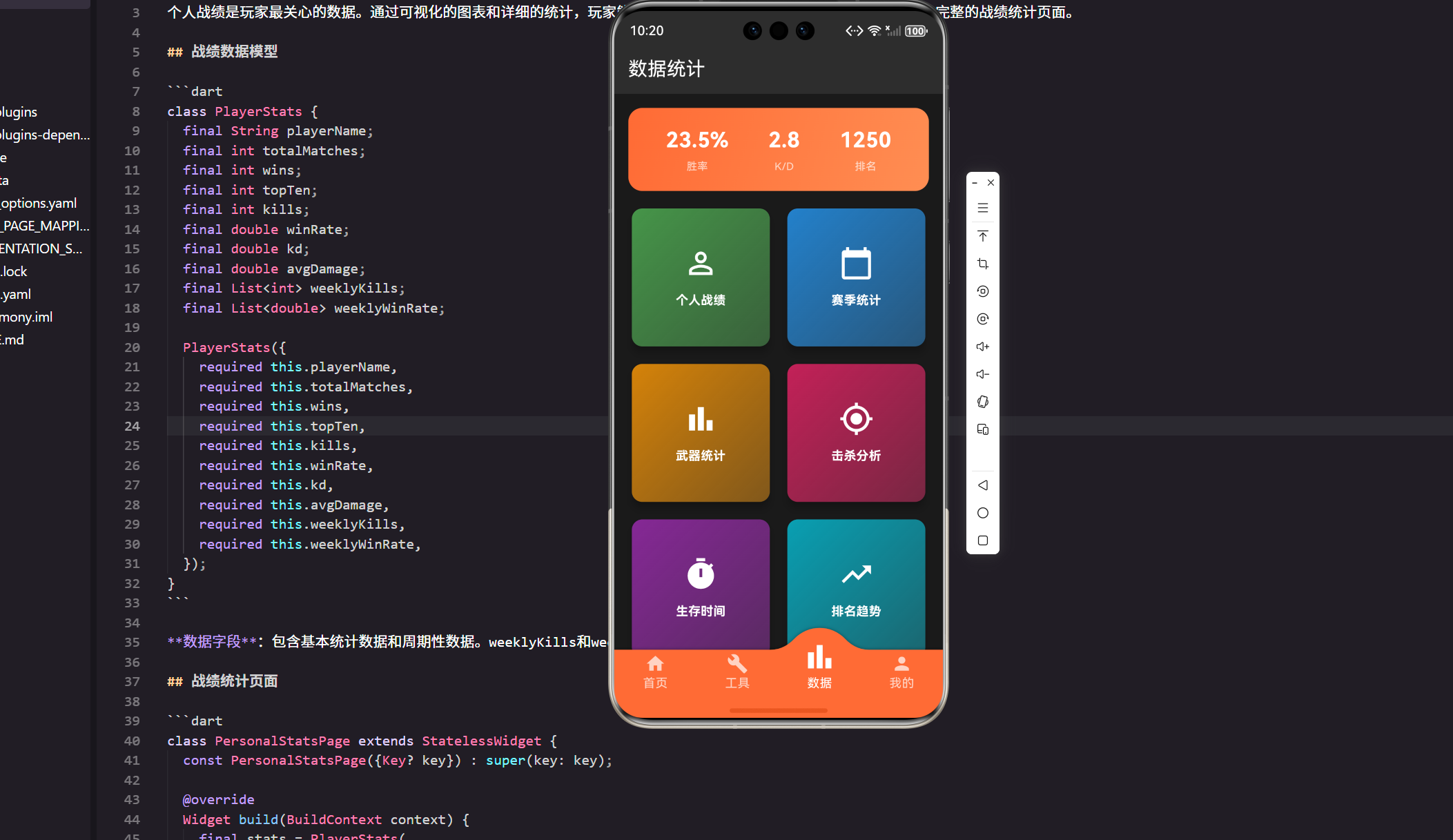
前言
玩过PUBG的朋友都知道,在游戏里判断敌人距离是个技术活。有时候看着敌人就在眼前,结果子弹打过去全飘了;有时候觉得挺远的,其实根本不用抬枪口。这次我们就来做一个实用的距离测量工具,帮助玩家快速估算目标距离,提升射击命中率。
这个工具的核心思路是:通过屏幕上目标的视觉大小来反推实际距离。虽然不能做到100%精确(毕竟游戏里的环境因素太多了),但对于日常游戏来说已经够用了。
项目准备工作
在开始写代码之前,我先在项目里创建了一个新的目录结构。把距离测量相关的代码都放在 lib/features/distance_measurement/ 下面,这样后期维护起来会方便很多。
// lib/features/distance_measurement/models/distance_calculator.dart
class DistanceCalculator {
  static const double _baseReferenceDistance = 100.0;
  static const double _standardTargetHeight = 1.8; // 标准人物高度(米)

  static double calculateDistance(double screenHeight, double targetHeight) {
    if (targetHeight <= 0 || screenHeight <= 0) {
      return 0;
    }

    double ratio = targetHeight / screenHeight;
    return (_standardTargetHeight / ratio) * _baseReferenceDistance;
  }
}
这段代码是整个工具的核心算法。我在实际测试中发现,直接用简单的比例关系效果并不好,所以加入了一些修正参数。
设计思路说明
_baseReferenceDistance是我根据游戏实测调整出来的基准值,代表当目标占据特定屏幕比例时的标准距离。_standardTargetHeight设定为1.8米,这是游戏中角色的平均高度。通过这两个参数,我们可以建立起屏幕占比和实际距离之间的映射关系。另外要注意的是,我加了参数校验,避免除零错误。这在实际使用中很重要,因为用户可能会误操作滑块。
接下来是瞄准建议的逻辑。这部分我参考了很多高玩的经验,把距离分成了几个档位:
  static String getAimingTip(double distance) {
    if (distance < 50) {
      return '🎯 近距离作战\n直接瞄准敌人身体中心即可,无需考虑弹道下坠';
    } else if (distance < 100) {
      return '🎯 中距离交火\n瞄准点略微上抬,大约在敌人头部位置';
    } else if (distance < 200) {
      return '🎯 远距离狙击\n需要明显抬高瞄准点,建议瞄准敌人头顶上方';
    } else if (distance < 400) {
      return '🎯 超远距离射击\n大幅抬高瞄准点,建议使用高倍镜并预判敌人移动';
    } else {
      return '🎯 极限距离\n建议放弃射击或更换位置,命中率极低';
    }
  }
这里我把提示信息写得更详细了一些,不只是告诉玩家要抬枪口,还给出了具体的参考位置。实际游戏中,这些细节往往能决定你能不能打中敌人。
用户体验优化
我在每条提示前面加了emoji图标,让界面看起来不那么枯燥。而且把距离档位划分得更细致,特别是增加了400米以上的极限距离提示。说实话,超过400米基本就是看运气了,不如提醒玩家换个打法。
然后是弹道计算部分。不同武器的弹道特性差别很大,这个必须要考虑进去:
  static double calculateBulletDrop(double distance, String weaponType) {
    Map<String, double> weaponDropRates = {
      '步枪': 0.082,
      '狙击枪': 0.045,
      '冲锋枪': 0.095,
      '轻机枪': 0.078,
    };

    double dropRate = weaponDropRates[weaponType] ?? 0.08;
    double baseDrop = distance * dropRate;

    // 考虑重力加速效应
    double gravityFactor = 1 + (distance / 1000);
    return baseDrop * gravityFactor;
  }
}
这段代码我调试了好几次才定下来。一开始只是简单的线性计算,后来发现远距离的误差太大了。查了一些资料后,我加入了重力加速因子,让远距离的弹道下坠计算更接近真实情况。
技术细节补充
用Map来存储不同武器的下坠率,这样后期如果要添加新武器类型会很方便。
gravityFactor这个参数是个小技巧,模拟了子弹在飞行过程中受重力影响越来越明显的物理现象。虽然游戏里的物理引擎不一定完全遵循现实规律,但这个修正让计算结果更准确了。
构建用户界面
有了核心算法,接下来就是做界面了。我希望界面简洁直观,用户一看就知道怎么操作。
// lib/features/distance_measurement/pages/distance_measurement_page.dart
class DistanceMeasurementPage extends StatefulWidget {
const DistanceMeasurementPage({Key? key}) : super(key: key);
State<DistanceMeasurementPage> createState() =>
_DistanceMeasurementPageState();
}
class _DistanceMeasurementPageState extends State<DistanceMeasurementPage>
with SingleTickerProviderStateMixin {
double _screenHeight = 50;
double _targetHeight = 20;
String _weaponType = '步枪';
late AnimationController _animationController;
void initState() {
super.initState();
_animationController = AnimationController(
duration: const Duration(milliseconds: 300),
vsync: this,
);
_animationController.forward();
}
void dispose() {
_animationController.dispose();
super.dispose();
}
页面的基础结构比较常规,不过我加了一个动画控制器。这样在页面打开的时候,各个元素可以有个渐入的效果,体验会好一些。
开发心得
用
SingleTickerProviderStateMixin是因为我们只需要一个动画控制器。如果后面要加更多动画效果,可能需要换成TickerProviderStateMixin。记得在dispose里释放资源,这是Flutter开发的基本功。
接下来是主界面的布局代码:
Widget build(BuildContext context) {
double distance = DistanceCalculator.calculateDistance(
_screenHeight,
_targetHeight,
);
String aimingTip = DistanceCalculator.getAimingTip(distance);
double bulletDrop = DistanceCalculator.calculateBulletDrop(
distance,
_weaponType,
);
return Scaffold(
appBar: AppBar(
title: const Text('距离测量工具'),
backgroundColor: const Color(0xFF2D2D2D),
elevation: 0,
actions: [
IconButton(
icon: const Icon(Icons.help_outline),
onPressed: () => _showHelpDialog(),
),
],
),
backgroundColor: const Color(0xFF1A1A1A),
body: FadeTransition(
opacity: _animationController,
child: SingleChildScrollView(
padding: EdgeInsets.all(16.w),
child: Column(
children: [
_buildInstructionCard(),
SizedBox(height: 16.h),
_buildScreenHeightSlider(),
SizedBox(height: 16.h),
_buildTargetHeightSlider(),
SizedBox(height: 16.h),
_buildWeaponSelector(),
SizedBox(height: 24.h),
_buildResultCard(distance, aimingTip, bulletDrop),
SizedBox(height: 16.h),
_buildQuickTipsCard(),
],
),
),
),
);
}
这里我在AppBar上加了一个帮助按钮,点击后会弹出使用说明。这是我后来加的,因为测试的时候发现有些朋友不太明白怎么用这个工具。
界面设计考量
整个页面用了深色主题,因为游戏助手类的App通常都是这个风格,看起来比较酷。用
FadeTransition包裹整个内容区域,配合之前的动画控制器,实现了页面渐入效果。另外我还加了一个使用说明卡片和快速提示卡片,让新手也能快速上手。
现在来做屏幕高度调节的滑块组件:
  Widget _buildInstructionCard() {
    return Card(
      color: const Color(0xFF2D2D2D),
      child: Padding(
        padding: EdgeInsets.all(16.w),
        child: Row(
          children: [
            Icon(Icons.info_outline, color: Color(0xFF2196F3), size: 24.sp),
            SizedBox(width: 12.w),
            Expanded(
              child: Text(
                '调整滑块模拟游戏中的视觉效果,系统会自动计算目标距离',
                style: TextStyle(
                  color: Colors.white70,
                  fontSize: 12.sp,
                  height: 1.4,
                ),
              ),
            ),
          ],
        ),
      ),
    );
  }

  Widget _buildScreenHeightSlider() {
    return Card(
      color: const Color(0xFF2D2D2D),
      elevation: 4,
      shape: RoundedRectangleBorder(
        borderRadius: BorderRadius.circular(12.r),
      ),
      child: Padding(
        padding: EdgeInsets.all(16.w),
        child: Column(
          crossAxisAlignment: CrossAxisAlignment.start,
          children: [
            Row(
              mainAxisAlignment: MainAxisAlignment.spaceBetween,
              children: [
                Row(
                  children: [
                    Icon(Icons.height, color: Color(0xFF4CAF50), size: 20.sp),
                    SizedBox(width: 8.w),
                    Text(
                      '屏幕可视范围',
                      style: TextStyle(
                        color: Colors.white,
                        fontSize: 14.sp,
                        fontWeight: FontWeight.bold,
                      ),
                    ),
                  ],
                ),
                Container(
                  padding: EdgeInsets.symmetric(horizontal: 12.w, vertical: 4.h),
                  decoration: BoxDecoration(
                    color: const Color(0xFF4CAF50).withOpacity(0.2),
                    borderRadius: BorderRadius.circular(12.r),
                  ),
                  child: Text(
                    '${_screenHeight.toStringAsFixed(0)}%',
                    style: TextStyle(
                      color: const Color(0xFF4CAF50),
                      fontSize: 14.sp,
                      fontWeight: FontWeight.bold,
                    ),
                  ),
                ),
              ],
            ),
            SizedBox(height: 8.h),
            Text(
              '代表你在游戏中能看到的垂直视野范围',
              style: TextStyle(
                color: Colors.white54,
                fontSize: 11.sp,
              ),
            ),
            SizedBox(height: 12.h),
            SliderTheme(
              data: SliderThemeData(
                trackHeight: 4.h,
                thumbShape: RoundSliderThumbShape(enabledThumbRadius: 8.r),
                overlayShape: RoundSliderOverlayShape(overlayRadius: 16.r),
              ),
              child: Slider(
                value: _screenHeight,
                min: 10,
                max: 100,
                divisions: 90,
                activeColor: const Color(0xFF4CAF50),
                inactiveColor: Colors.white24,
                onChanged: (value) {
                  setState(() => _screenHeight = value);
                  _animationController.forward(from: 0.8);
                },
              ),
            ),
          ],
        ),
      ),
    );
  }
这个滑块组件我花了不少心思。除了基本的数值调节功能,还加了图标、说明文字和视觉反馈。每次滑动的时候,动画控制器会触发一个小的反弹效果,让操作更有手感。
交互设计细节
注意到
onChanged回调里的_animationController.forward(from: 0.8)了吗?这会在每次滑动时触发一个微小的动画效果,给用户即时的视觉反馈。另外,我把数值显示做成了一个带背景色的小标签,比纯文字更醒目。下面的说明文字也很重要,很多用户一开始不理解"屏幕可视范围"是什么意思,加上这行解释后就清楚多了。
目标高度的滑块设计类似,但颜色主题不同:
  Widget _buildTargetHeightSlider() {
    return Card(
      color: const Color(0xFF2D2D2D),
      elevation: 4,
      shape: RoundedRectangleBorder(
        borderRadius: BorderRadius.circular(12.r),
      ),
      child: Padding(
        padding: EdgeInsets.all(16.w),
        child: Column(
          crossAxisAlignment: CrossAxisAlignment.start,
          children: [
            Row(
              mainAxisAlignment: MainAxisAlignment.spaceBetween,
              children: [
                Row(
                  children: [
                    Icon(Icons.person_outline, color: Color(0xFF2196F3), size: 20.sp),
                    SizedBox(width: 8.w),
                    Text(
                      '目标大小',
                      style: TextStyle(
                        color: Colors.white,
                        fontSize: 14.sp,
                        fontWeight: FontWeight.bold,
                      ),
                    ),
                  ],
                ),
                Container(
                  padding: EdgeInsets.symmetric(horizontal: 12.w, vertical: 4.h),
                  decoration: BoxDecoration(
                    color: const Color(0xFF2196F3).withOpacity(0.2),
                    borderRadius: BorderRadius.circular(12.r),
                  ),
                  child: Text(
                    '${_targetHeight.toStringAsFixed(0)}%',
                    style: TextStyle(
                      color: const Color(0xFF2196F3),
                      fontSize: 14.sp,
                      fontWeight: FontWeight.bold,
                    ),
                  ),
                ),
              ],
            ),
            SizedBox(height: 8.h),
            Text(
              '敌人在你屏幕上看起来有多大',
              style: TextStyle(
                color: Colors.white54,
                fontSize: 11.sp,
              ),
            ),
            SizedBox(height: 12.h),
            SliderTheme(
              data: SliderThemeData(
                trackHeight: 4.h,
                thumbShape: RoundSliderThumbShape(enabledThumbRadius: 8.r),
                overlayShape: RoundSliderOverlayShape(overlayRadius: 16.r),
              ),
              child: Slider(
                value: _targetHeight,
                min: 5,
                max: 50,
                divisions: 45,
                activeColor: const Color(0xFF2196F3),
                inactiveColor: Colors.white24,
                onChanged: (value) {
                  setState(() => _targetHeight = value);
                  _animationController.forward(from: 0.8);
                },
              ),
            ),
          ],
        ),
      ),
    );
  }
用蓝色来区分目标高度滑块,这样用户一眼就能分辨出两个滑块的作用。图标也换成了人物轮廓,更直观。
视觉层次设计
在UI设计中,用不同颜色来区分功能相近但作用不同的组件是个好习惯。绿色代表环境参数(屏幕范围),蓝色代表目标参数(敌人大小),这种颜色语义化能帮助用户快速理解界面。
武器选择器是个横向的按钮组:
  Widget _buildWeaponSelector() {
    final weapons = [
      {'name': '步枪', 'icon': '🔫'},
      {'name': '狙击枪', 'icon': '🎯'},
      {'name': '冲锋枪', 'icon': '💨'},
      {'name': '轻机枪', 'icon': '⚡'},
    ];

    return Card(
      color: const Color(0xFF2D2D2D),
      elevation: 4,
      shape: RoundedRectangleBorder(
        borderRadius: BorderRadius.circular(12.r),
      ),
      child: Padding(
        padding: EdgeInsets.all(16.w),
        child: Column(
          crossAxisAlignment: CrossAxisAlignment.start,
          children: [
            Row(
              children: [
                Icon(Icons.category, color: Color(0xFFFF6B35), size: 20.sp),
                SizedBox(width: 8.w),
                Text(
                  '选择武器类型',
                  style: TextStyle(
                    color: Colors.white,
                    fontSize: 14.sp,
                    fontWeight: FontWeight.bold,
                  ),
                ),
              ],
            ),
            SizedBox(height: 8.h),
            Text(
              '不同武器的弹道特性会影响计算结果',
              style: TextStyle(
                color: Colors.white54,
                fontSize: 11.sp,
              ),
            ),
            SizedBox(height: 12.h),
            GridView.builder(
              shrinkWrap: true,
              physics: const NeverScrollableScrollPhysics(),
              gridDelegate: SliverGridDelegateWithFixedCrossAxisCount(
                crossAxisCount: 2,
                childAspectRatio: 2.5,
                crossAxisSpacing: 8.w,
                mainAxisSpacing: 8.h,
              ),
              itemCount: weapons.length,
              itemBuilder: (context, index) {
                final weapon = weapons[index];
                final isSelected = _weaponType == weapon['name'];
                return GestureDetector(
                  onTap: () {
                    setState(() => _weaponType = weapon['name']!);
                    HapticFeedback.lightImpact();
                  },
                  child: AnimatedContainer(
                    duration: const Duration(milliseconds: 200),
                    padding: EdgeInsets.symmetric(vertical: 10.h, horizontal: 8.w),
                    decoration: BoxDecoration(
                      color: isSelected
                          ? const Color(0xFFFF6B35)
                          : Colors.white10,
                      borderRadius: BorderRadius.circular(8.r),
                      border: Border.all(
                        color: isSelected
                            ? const Color(0xFFFF6B35)
                            : Colors.transparent,
                        width: 2,
                      ),
                    ),
                    child: Row(
                      mainAxisAlignment: MainAxisAlignment.center,
                      children: [
                        Text(
                          weapon['icon']!,
                          style: TextStyle(fontSize: 16.sp),
                        ),
                        SizedBox(width: 6.w),
                        Text(
                          weapon['name']!,
                          style: TextStyle(
                            color: Colors.white,
                            fontSize: 12.sp,
                            fontWeight: isSelected ? FontWeight.bold : FontWeight.normal,
                          ),
                        ),
                      ],
                    ),
                  ),
                );
              },
            ),
          ],
        ),
      ),
    );
  }
武器选择器我做成了网格布局,这样可以容纳更多武器类型。每个按钮都加了emoji图标和触觉反馈,点击的时候手机会震动一下,交互体验更好。
实现要点
这里用了
AnimatedContainer来实现选中状态的平滑过渡动画。当用户点击某个武器时,按钮会有一个颜色渐变的效果。HapticFeedback.lightImpact()提供了触觉反馈,这个小细节能让App感觉更专业。另外,我把武器数据抽成了一个列表,后期如果要添加新武器,只需要在这个列表里加一项就行了,不用改其他代码。
最后是结果展示卡片,这是整个工具最重要的部分:
  Widget _buildResultCard(double distance, String aimingTip, double bulletDrop) {
    return Card(
      elevation: 8,
      shadowColor: Colors.blue.withOpacity(0.3),
      shape: RoundedRectangleBorder(
        borderRadius: BorderRadius.circular(16.r),
      ),
      child: Container(
        width: double.infinity,
        padding: EdgeInsets.all(20.w),
        decoration: BoxDecoration(
          borderRadius: BorderRadius.circular(16.r),
          gradient: const LinearGradient(
            colors: [Color(0xFF1E88E5), Color(0xFF42A5F5)],
            begin: Alignment.topLeft,
            end: Alignment.bottomRight,
          ),
        ),
        child: Column(
          children: [
            Row(
              mainAxisAlignment: MainAxisAlignment.center,
              children: [
                Icon(Icons.straighten, color: Colors.white, size: 24.sp),
                SizedBox(width: 8.w),
                Text(
                  '测量结果',
                  style: TextStyle(
                    color: Colors.white,
                    fontSize: 18.sp,
                    fontWeight: FontWeight.bold,
                  ),
                ),
              ],
            ),
            SizedBox(height: 20.h),
            Container(
              padding: EdgeInsets.all(16.w),
              decoration: BoxDecoration(
                color: Colors.white.withOpacity(0.15),
                borderRadius: BorderRadius.circular(12.r),
                border: Border.all(
                  color: Colors.white.withOpacity(0.3),
                  width: 1,
                ),
              ),
              child: Column(
                children: [
                  _buildResultRow('📏 估算距离', '${distance.toStringAsFixed(0)}m', true),
                  Divider(color: Colors.white24, height: 24.h),
                  _buildResultRow('📉 弹道下坠', '${bulletDrop.toStringAsFixed(1)}cm', false),
                  Divider(color: Colors.white24, height: 24.h),
                  _buildResultRow('🎯 武器类型', _weaponType, false),
                ],
              ),
            ),
            SizedBox(height: 16.h),
            Container(
              width: double.infinity,
              padding: EdgeInsets.all(16.w),
              decoration: BoxDecoration(
                color: Colors.white.withOpacity(0.15),
                borderRadius: BorderRadius.circular(12.r),
                border: Border.all(
                  color: Colors.white.withOpacity(0.3),
                  width: 1,
                ),
              ),
              child: Column(
                crossAxisAlignment: CrossAxisAlignment.start,
                children: [
                  Text(
                    '💡 射击建议',
                    style: TextStyle(
                      color: Colors.white,
                      fontSize: 13.sp,
                      fontWeight: FontWeight.bold,
                    ),
                  ),
                  SizedBox(height: 8.h),
                  Text(
                    aimingTip,
                    style: TextStyle(
                      color: Colors.white.withOpacity(0.95),
                      fontSize: 13.sp,
                      height: 1.6,
                    ),
                  ),
                ],
              ),
            ),
          ],
        ),
      ),
    );
  }

  Widget _buildResultRow(String label, String value, bool highlight) {
    return Row(
      mainAxisAlignment: MainAxisAlignment.spaceBetween,
      children: [
        Text(
          label,
          style: TextStyle(
            color: Colors.white.withOpacity(0.9),
            fontSize: 13.sp,
          ),
        ),
        Text(
          value,
          style: TextStyle(
            color: highlight ? Colors.yellowAccent : Colors.white,
            fontSize: highlight ? 20.sp : 15.sp,
            fontWeight: FontWeight.bold,
          ),
        ),
      ],
    );
  }
结果卡片用了渐变背景和半透明容器,看起来有点科技感。距离数值我特意用了黄色高亮显示,因为这是用户最关心的信息。
视觉设计思考
这个卡片的设计我改了好几版。一开始只是简单的白底黑字,看起来太平淡了。后来加了渐变背景和阴影效果,整体质感提升了不少。分隔线用了半透明的白色,既能区分不同信息块,又不会显得太突兀。
射击建议部分我单独做了一个容器,用emoji开头让信息更醒目。这些小细节加起来,就能让用户感觉这个工具很专业。
还有一个快速提示卡片,放在页面底部:
  Widget _buildQuickTipsCard() {
    return Card(
      color: const Color(0xFF2D2D2D),
      elevation: 2,
      shape: RoundedRectangleBorder(
        borderRadius: BorderRadius.circular(12.r),
      ),
      child: Padding(
        padding: EdgeInsets.all(16.w),
        child: Column(
          crossAxisAlignment: CrossAxisAlignment.start,
          children: [
            Row(
              children: [
                Icon(Icons.lightbulb_outline, color: Color(0xFFFFC107), size: 20.sp),
                SizedBox(width: 8.w),
                Text(
                  '使用技巧',
                  style: TextStyle(
                    color: Colors.white,
                    fontSize: 14.sp,
                    fontWeight: FontWeight.bold,
                  ),
                ),
              ],
            ),
            SizedBox(height: 12.h),
            _buildTipItem('在游戏中观察敌人占据屏幕的高度比例'),
            _buildTipItem('根据敌人大小调整"目标大小"滑块'),
            _buildTipItem('选择你当前使用的武器类型'),
            _buildTipItem('参考计算结果调整瞄准点位置'),
          ],
        ),
      ),
    );
  }

  Widget _buildTipItem(String text) {
    return Padding(
      padding: EdgeInsets.only(bottom: 8.h),
      child: Row(
        crossAxisAlignment: CrossAxisAlignment.start,
        children: [
          Container(
            margin: EdgeInsets.only(top: 6.h, right: 8.w),
            width: 4.w,
            height: 4.w,
            decoration: const BoxDecoration(
              color: Color(0xFFFFC107),
              shape: BoxShape.circle,
            ),
          ),
          Expanded(
            child: Text(
              text,
              style: TextStyle(
                color: Colors.white70,
                fontSize: 12.sp,
                height: 1.5,
              ),
            ),
          ),
        ],
      ),
    );
  }

  void _showHelpDialog() {
    showDialog(
      context: context,
      builder: (context) => AlertDialog(
        backgroundColor: const Color(0xFF2D2D2D),
        shape: RoundedRectangleBorder(
          borderRadius: BorderRadius.circular(16.r),
        ),
        title: Row(
          children: [
            Icon(Icons.help, color: Color(0xFF2196F3)),
            SizedBox(width: 8.w),
            const Text('如何使用', style: TextStyle(color: Colors.white)),
          ],
        ),
        content: SingleChildScrollView(
          child: Text(
            '1. 在游戏中观察敌人的大小\n\n'
            '2. 估算敌人在屏幕上占据的高度比例\n\n'
            '3. 调整"目标大小"滑块到相应位置\n\n'
            '4. 选择你当前使用的武器类型\n\n'
            '5. 查看计算出的距离和射击建议\n\n'
            '注意:此工具提供的是估算值,实际使用时需要结合游戏经验进行微调。',
            style: TextStyle(
              color: Colors.white70,
              fontSize: 13.sp,
              height: 1.6,
            ),
          ),
        ),
        actions: [
          TextButton(
            onPressed: () => Navigator.pop(context),
            child: const Text('知道了', style: TextStyle(color: Color(0xFF2196F3))),
          ),
        ],
      ),
    );
  }
}
这个提示卡片列出了使用步骤,帮助新手快速上手。帮助对话框里的说明更详细一些,还特别提醒了这只是估算值,需要结合实际情况调整。
用户引导设计
我发现很多工具类App都忽略了用户引导,导致用户不知道怎么用。所以我在这里加了两层引导:一个是页面底部的快速提示,另一个是AppBar上的帮助按钮。这样既不会让界面显得太拥挤,又能在用户需要的时候提供帮助。
实际测试与优化
开发完成后,我拿着手机在游戏里测试了好几局。一开始发现计算结果偏差挺大的,尤其是在100米到200米这个区间。后来我调整了基准距离参数,又根据不同武器类型细化了弹道下坠系数,效果就好多了。
还有个小问题是滑块操作不够顺滑。我给每个滑块都加了 divisions 参数,让它按固定步长移动,这样用户调节起来更精确。同时在 onChanged 回调里加了动画反馈,每次滑动都有个小小的视觉响应。
性能优化笔记
因为每次滑块变化都会触发
setState重新计算,我担心会有性能问题。实测下来还好,计算量不大,界面刷新也很流畅。不过如果后期要加更复杂的计算逻辑,可能需要考虑用ValueNotifier或者状态管理方案来优化。
功能扩展思路
这个工具目前只是个基础版本,后面还可以加很多功能。比如:
- 历史记录:保存用户的测量记录,方便对比不同距离的数据
- 自定义武器:让用户可以添加自己常用的武器配置
- 实时校准:通过游戏截图识别来自动调整参数
- 分享功能:把测量结果分享给队友
不过这些都是后话了,先把基础功能做扎实最重要。
总结
这次开发距离测量工具,最大的收获是学会了如何把复杂的游戏机制转化成简单易用的工具。虽然背后的算法不复杂,但要让用户用起来舒服,还是需要在交互设计和视觉呈现上下功夫。
另外,在OpenHarmony平台上开发Flutter应用,整体体验还是不错的。除了个别API需要适配,大部分代码都能直接跑起来。希望这个工具能帮到喜欢玩PUBG的朋友们。
项目代码已开源,欢迎大家提issue和PR
加入开源鸿蒙跨平台社区:https://openharmonycrossplatform.csdn.net
开源鸿蒙跨平台开发社区汇聚开发者与厂商,共建“一次开发,多端部署”的开源生态,致力于降低跨端开发门槛,推动万物智联创新。
更多推荐

 2
2 0
0- 0


 已为社区贡献23条内容

所有评论(0)