Row和Column基础布局详解
Row和Column是Flutter中最基础也是最重要的布局组件,它们分别负责水平和垂直方向的子组件排列。掌握这两个组件的使用方法,是构建Flutter应用界面的第一步。
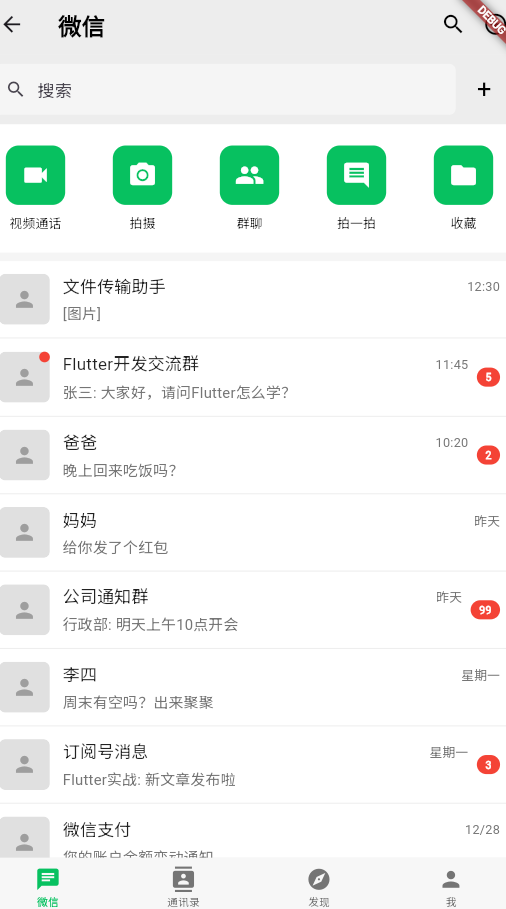
Row和Column基础布局详解
Row和Column是Flutter中最基础也是最重要的布局组件,它们分别负责水平和垂直方向的子组件排列。掌握这两个组件的使用方法,是构建Flutter应用界面的第一步。
一、Row组件基础用法
Row组件用于在水平方向上排列子组件,其主轴为水平方向,交叉轴为垂直方向。Row继承自Flex类,因此拥有Flex的所有特性。
Row(
  mainAxisAlignment: MainAxisAlignment.start,
  crossAxisAlignment: CrossAxisAlignment.center,
  mainAxisSize: MainAxisSize.max,
  children: [
    Container(width: 80, height: 80, color: Colors.red),
    Container(width: 80, height: 80, color: Colors.green),
    Container(width: 80, height: 80, color: Colors.blue),
  ],
)
主轴对齐方式
MainAxisAlignment决定了子组件在Row主轴(水平方向)上的分布方式,共有六种对齐方式:
| 对齐方式 | 说明 | 视觉效果 |
|---|---|---|
start |
从起始位置开始排列 | 🔴🟢🔵 |
end |
从结束位置开始排列 | 🔴🟢🔵 |
center |
居中排列 | 🔴🟢🔵 |
spaceBetween |
两端对齐,中间等分 | 🔴 🟢 🔵 |
spaceAround |
每个子组件两侧间距相等 | 🔴 🟢 🔵 |
spaceEvenly |
所有间距完全相等 | 🔴 🟢 🔵 |
交叉轴对齐方式
CrossAxisAlignment控制子组件在垂直方向上的对齐:
CrossAxisAlignment.start    // 顶部对齐
CrossAxisAlignment.end      // 底部对齐
CrossAxisAlignment.center   // 垂直居中(默认)
CrossAxisAlignment.stretch  // 拉伸填满父组件高度
CrossAxisAlignment.baseline // 文字基线对齐
二、Column组件基础用法
Column组件用于在垂直方向上排列子组件,其主轴为垂直方向,交叉轴为水平方向。Column的属性与Row完全相同,只是主轴和交叉轴的方向互换。
Column(
  mainAxisAlignment: MainAxisAlignment.spaceEvenly,
  crossAxisAlignment: CrossAxisAlignment.stretch,
  children: [
    Container(height: 60, color: Colors.orange),
    Container(height: 60, color: Colors.purple),
    Container(height: 60, color: Colors.teal),
  ],
)
在Column中,MainAxisAlignment控制子组件的垂直对齐,CrossAxisAlignment控制水平对齐。
三、MainAxisSize属性详解
MainAxisSize决定了Row和Column在主轴方向上的尺寸策略。
MainAxisSize.max:尽可能占满父组件在主轴方向的空间(默认值)MainAxisSize.min:根据子组件的尺寸自适应
// 示例1:MainAxisSize.max
Row(
  mainAxisSize: MainAxisSize.max,
  children: [Text('Hello')],
)
// Row宽度占满整个屏幕

// 示例2:MainAxisSize.min
Row(
  mainAxisSize: MainAxisSize.min,
  children: [Text('Hello')],
)
// Row宽度只够容纳'Hello'文字
当Row需要包裹子组件而不是占满整个宽度时:
Center(
  child: Row(
    mainAxisSize: MainAxisSize.min,
    children: [
      Icon(Icons.star, color: Colors.amber),
      SizedBox(width: 8),
      Text('4.5'),
    ],
  ),
)
四、布局流程图
Row和Column的布局遵循Flutter的约束传递机制,下图展示了完整的布局过程:
五、实战案例:应用底部导航栏
下面通过一个完整的底部导航栏示例,展示Row的实际应用:
class BottomNavBar extends StatelessWidget {
Widget build(BuildContext context) {
return Container(
height: 60,
decoration: BoxDecoration(
color: Colors.white,
boxShadow: [
BoxShadow(
color: Colors.black.withOpacity(0.1),
blurRadius: 4,
offset: Offset(0, -2),
),
],
),
child: Row(
mainAxisAlignment: MainAxisAlignment.spaceAround,
children: [
_buildNavItem(Icons.home, '首页', true),
_buildNavItem(Icons.explore, '发现', false),
_buildNavItem(Icons.message, '消息', false),
_buildNavItem(Icons.person, '我的', false),
],
),
);
}
Widget _buildNavItem(IconData icon, String label, bool isSelected) {
return Column(
mainAxisAlignment: MainAxisAlignment.center,
children: [
Icon(
icon,
color: isSelected ? Colors.blue : Colors.grey,
size: 24,
),
SizedBox(height: 4),
Text(
label,
style: TextStyle(
fontSize: 12,
color: isSelected ? Colors.blue : Colors.grey,
),
),
],
);
}
}
导航栏布局分析
- 外层Container:设置固定高度和阴影效果
- Row:横向排列导航项,使用
spaceAround实现均匀分布 - Column:每个导航项内部使用Column垂直排列图标和文字
- SizedBox:在图标和文字之间添加适当间距
六、实战案例:应用顶部栏
顶部栏是另一个常见的Row应用场景:
class AppBar extends StatelessWidget {
final String title;
AppBar({required this.title});
Widget build(BuildContext context) {
return Container(
height: 56,
padding: EdgeInsets.symmetric(horizontal: 16),
decoration: BoxDecoration(
color: Colors.white,
border: Border(
bottom: BorderSide(color: Colors.grey[300]!),
),
),
child: Row(
children: [
// 左侧返回按钮
IconButton(
icon: Icon(Icons.arrow_back),
onPressed: () {},
),
// 中间标题
Expanded(
child: Text(
title,
style: TextStyle(
fontSize: 18,
fontWeight: FontWeight.w600,
),
textAlign: TextAlign.center,
),
),
// 右侧操作按钮
IconButton(
icon: Icon(Icons.search),
onPressed: () {},
),
IconButton(
icon: Icon(Icons.more_vert),
onPressed: () {},
),
],
),
);
}
}
顶部栏布局要点
- 使用
Expanded让标题占据中间所有可用空间 - 左右两侧的IconButton固定宽度
TextAlign.center确保标题在可用空间内居中- 通过
SizedBox或padding控制间距
七、嵌套布局实践
实际应用中,Row和Column经常需要嵌套使用。下面展示一个包含多个嵌套层的页面布局:
class PageLayout extends StatelessWidget {
Widget build(BuildContext context) {
return Column(
children: [
// 顶部栏
Container(
height: 56,
color: Colors.blue,
child: Row(
children: [
Icon(Icons.menu, color: Colors.white),
SizedBox(width: 16),
Text(
'应用标题',
style: TextStyle(color: Colors.white, fontSize: 18),
),
],
),
),
// 内容区域
Expanded(
child: SingleChildScrollView(
child: Column(
children: [
_buildCard('卡片1', Colors.red),
_buildCard('卡片2', Colors.green),
_buildCard('卡片3', Colors.blue),
],
),
),
),
// 底部栏
Container(
height: 60,
color: Colors.grey[100],
child: Row(
mainAxisAlignment: MainAxisAlignment.spaceEvenly,
children: [
Icon(Icons.home),
Icon(Icons.search),
Icon(Icons.favorite),
Icon(Icons.person),
],
),
),
],
);
}
Widget _buildCard(String title, Color color) {
return Container(
margin: EdgeInsets.all(16),
height: 120,
decoration: BoxDecoration(
color: color,
borderRadius: BorderRadius.circular(8),
),
child: Center(
child: Text(
title,
style: TextStyle(color: Colors.white, fontSize: 24),
),
),
);
}
}
八、常见问题与解决方案
Row溢出错误
问题:Row的子组件总宽度超过父组件宽度时,出现溢出错误
Row(
  children: [
    Container(width: 200, color: Colors.red),
    Container(width: 200, color: Colors.green),
    Container(width: 200, color: Colors.blue),
  ],
)
// 错误:'A RenderFlex overflowed by x pixels.'
解决方案:
- 使用
Flexible或Expanded包装子组件 - 使用
ListView替代Row - 减小子组件尺寸或使用百分比布局
// 解决方案
Row(
  children: [
    Expanded(flex: 1, child: Container(color: Colors.red, height: 50)),
    Expanded(flex: 1, child: Container(color: Colors.green, height: 50)),
    Expanded(flex: 1, child: Container(color: Colors.blue, height: 50)),
  ],
)
子组件无法居中
问题:设置MainAxisAlignment.center但子组件仍然不在中心
原因:Row的默认mainAxisSize是max,Row占满整个宽度
解决方案:设置mainAxisSize: MainAxisSize.min
Center(
  child: Row(
    mainAxisSize: MainAxisSize.min,
    mainAxisAlignment: MainAxisAlignment.center,
    children: [
      Container(width: 100, height: 50, color: Colors.red),
    ],
  ),
)
Column高度不够
问题:Column的子组件总高度超过屏幕高度时,内容被裁剪
解决方案:
- 使用
Expanded让Column占据剩余空间 - 使用
SingleChildScrollView包裹Column - 使用
ListView替代Column
Scaffold(
  body: Column(
    children: [
      Container(height: 100, color: Colors.blue),
      Expanded(
        child: SingleChildScrollView(
          child: Column(
            children: List.generate(20, (index) {
              return Container(
                height: 60,
                margin: EdgeInsets.symmetric(vertical: 8),
                color: Colors.primaries[index % Colors.primaries.length],
                child: Center(child: Text('Item $index')),
              );
            }),
          ),
        ),
      ),
      Container(height: 60, color: Colors.grey[100]),
    ],
  ),
)
九、完整可运行示例
本项目包含完整的可运行示例,展示了Row和Column的综合应用。运行项目后,可以在首页看到所有示例列表,点击任意示例即可查看详细实现。
项目入口位于 lib/main.dart,示例代码位于 lib/20/examples/ 目录下。
十、布局设计最佳实践
选择合适的布局方式
根据实际需求选择Row、Column或其他布局组件:
// 适合使用Row的场景
- 导航栏
- 按钮组
- 信息展示行
- 标签页

// 适合使用Column的场景
- 表单
- 列表项
- 页面结构
- 步骤指示器
避免过度嵌套
过深的嵌套会影响性能和可读性,建议将重复的布局模式提取为独立组件。
合理使用间距
使用SizedBox或Container的padding属性来控制间距,保持代码清晰易读。
Row和Column是Flutter布局的基础,熟练掌握这两个组件的使用方法,将为后续学习更复杂的布局组件打下坚实基础。
欢迎加入开源鸿蒙跨平台社区:https://openharmonycrossplatform.csdn.net

开源鸿蒙跨平台开发社区汇聚开发者与厂商,共建“一次开发,多端部署”的开源生态,致力于降低跨端开发门槛,推动万物智联创新。
更多推荐

 16
16 0
0- 0


 已为社区贡献12条内容

所有评论(0)