字符函数和字符串函数
本文介绍了C语言中常用的字符和字符串处理函数,主要包括:1. 字符分类函数(如islower)和转换函数(如toupper);2. 字符串操作函数(strlen、strcpy、strcat、strcmp)及其模拟实现方法;3. 带长度限制的安全版本函数(strncpy、strncat、strncmp);4. 字符串查找函数strstr及其实现原理;5. 字符串分割函数strtok和错误信息函数st
1. 字符分类函数
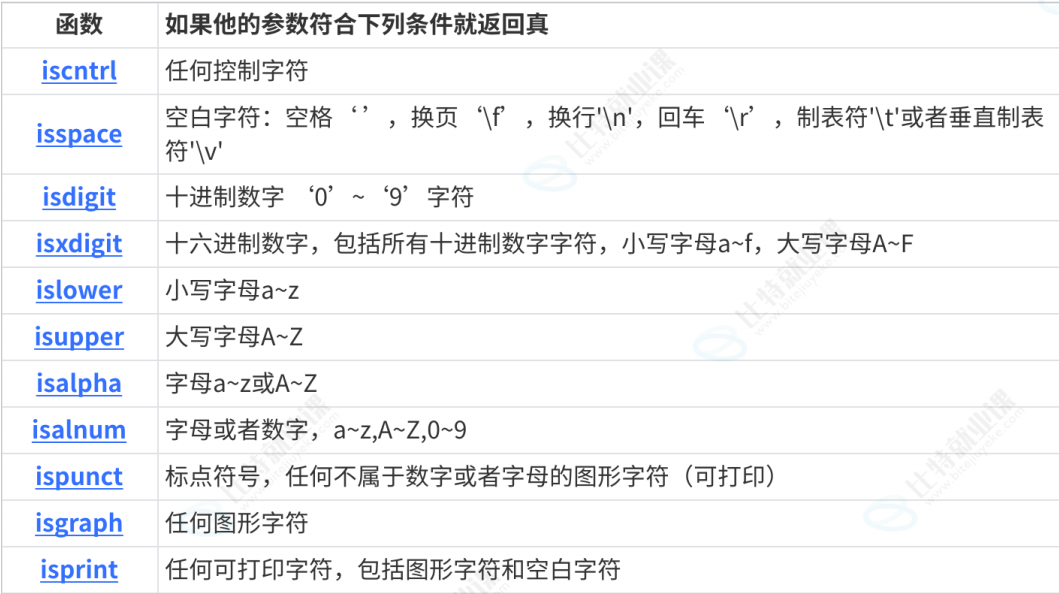
int islower ( int c );#include <stdio.h>
#include <ctype.h>
int main ()
{
int i = 0;
char str[] = "Test String.\n";
char c;
while (str[i])
{
c = str[i];
if (islower(c))
c -= 32;
putchar(c);
i++;
}
return 0;
}putchar(c) 将转换后的字符输出到控制台。
2. 字符转换函数
int tolower ( int c ); //将参数传进去的⼤写字⺟转⼩写
int toupper ( int c ); //将参数传进去的⼩写字⺟转⼤写#include <stdio.h>
#include <ctype.h>
int main ()
{
int i = 0;
char str[] = "Test String.\n";
char c;
while (str[i])
{
c = str[i];
if (islower(c))
c = toupper(c);
putchar(c);
i++;
}
return 0;
}3. strlen 的使用和模拟实现
size_t strlen ( const char * str );#include <stdio.h>
#include <string.h>
int main()
{
const char* str1 = "abcdef";
const char* str2 = "bbb";
if(strlen(str2)-strlen(str1)>0)
{
printf("str2>str1\n");
}
else
{
printf("srt1>str2\n");
}
return 0;
}//计数器⽅式
int my_strlen(const char * str)
{
int count = 0;
assert(str);
while(*str)
{
count++;
str++;
}
return count;
}方式2:
//不能创建临时变量计数器
int my_strlen(const char * str)
{
assert(str);
if(*str == '\0')
return 0;
else
return 1+my_strlen(str+1);
}//指针-指针的⽅式
int my_strlen(char *s)
{
assert(str);
char *p = s;
while(*p != '\0' )
p++;
return p-s;
}4. strcpy 的使用和模拟实现
char* strcpy(char * destination, const char * source );将源字符串指向的C字符串复制到目标数组中,包括终止的空字符(并在该点停止)。
源字符串必须以 '\0' 结束。
会将源字符串中的 '\0' 拷贝到目标空间。
目标空间必须足够大,以确保能存放源字符串。
目标空间必须可修改。
学会模拟实现。
strcpy的模拟实现:
//1.参数顺序
//2.函数的功能,停⽌条件
//3.assert
//4.const修饰指针
//5.函数返回值
//6.题⽬出⾃《⾼质量C/C++编程》书籍最后的试题部分
char* my_strcpy(char *dest, const char*src)
{
char *ret = dest;
assert(dest != NULL);
assert(src != NULL);
while((*dest++ = *src++))
{
;
}
return ret;
}
5. strcat 的使用和模拟实现
模拟实现strcat函数:
char *my_strcat(char *dest, const char*src)
{
char *ret = dest;
assert(dest != NULL);
assert(src != NULL);
while(*dest)
{
dest++;
}
while((*dest++ = *src++))
{
;
}
return ret;
}
my_strcat 找到的是字符串的末尾(\0),不是缓冲区的末尾,只要缓冲区足够大,复制就不会越界;
越界只发生在 “缓冲区空闲空间 < 源字符串长度” 时;
实际开发中,一定要确保目标缓冲区足够大,或使用带长度限制的 strncat;
核心逻辑:字符串的末尾是 “逻辑结束”,缓冲区的末尾是 “物理结束”,两者不是一回事。
6. strcmp 的使用和模拟实现
该函数开始比较每个字符串的第一个字符。若两者相等,则继续比较后续字符对,直至字符不一致或遇到终止空字符为止。
标准规定:
第一个字符串大于第二个字符串,则返回大于0的数字
第一个字符串等于第二个字符串,则返回0
第一个字符串小于第二个字符串,则返回小于0的数字
那么如何判断两个字符串? 比较两个字符串中对应位置上字符ASCII码值的大小。
strcmp函数的模拟实现:
int my_strcmp (const char * str1, const char * str2)
{
int ret = 0 ;
assert(str1 != NULL);
assert(str2 != NULL);
while(*str1 == *str2)
{
if(*str1 == '\0')
return 0;
str1++;
str2++;
}
return *str1-*str2;
}
7. strncpy 函数的使用
char * strncpy ( char * destination, const char * source, size_t num );将源字符串的前num个字符复制到目标字符串。若在完成num个字符复制前检测到源字符串C字符串的结束(以空字符为标志),则在目标字符串末尾补零,直至总字符数达到num个。
8. strncat 函数的使用
char * strncat ( char * destination, const char * source, size_t num );/* strncat example */
#include <stdio.h>
#include <string.h>
int main ()
{
char str1[20];
char str2[20];
strcpy (str1,"To be ");
strcpy (str2,"or not to be");
strncat (str1, str2, 6);
printf("%s\n", str1);
return 0;
}9. strncmp函数的使用
int strncmp ( const char * str1, const char * str2, size_t num );
10. strstr 的使用和模拟实现
char * strstr ( const char * str1, const char * str2);函数返回字符串str2在字符串str1中第一次出现的位置。
字符串的比较匹配不包含 \0 字符,以 \0 作为结束标志。
/* strstr example */
#include <stdio.h>
#include <string.h>

int main ()
{
char str[] ="This is a simple string";
char * pch;
pch = strstr (str,"simple");
strncpy (pch,"sample",6);
printf("%s\n", str);
return 0;
}char * strstr (const char * str1, const char * str2)
{
char *cp = (char *) str1;
char *s1, *s2;
if ( !*str2 )
return((char *)str1);
while (*cp)
{
s1 = cp;
s2 = (char *) str2;
while ( *s1 && *s2 && !(*s1-*s2) )
s1++, s2++;
if (!*s2)
return(cp);
cp++;
}
return(NULL);
}函数定义
const char *str1:被查找的主字符串,只读。
const char *str2:要查找的子串,只读。
返回值 char *:找到子串时返回其在 str1 中的起始地址;未找到返回 NULL。
初始化与特殊情况处理
cp 是遍历主字符串的指针,初始化为 str1 的起始地址。
如果子串 str2 是空字符串(!*str2 为真),直接返回 str1 的起始地址(按 C 标准,空串在任何字符串的开头都存在)。
遍历主字符串
外层循环:用 cp 遍历主字符串 str1,直到遇到 \0。
每次循环时,s1 指向当前 cp 的位置(作为当前匹配的起点),s2 指向子串 str2 的起始位置。
逐字符匹配子串
内层循环:逐字符比较 s1 和 s2 指向的字符。
条件 *s1 && *s2 && !(*s1 - *s2) 表示:两个字符都不为 \0,且 ASCII 码相等(*s1 - *s2 == 0)。
匹配成功时,两个指针同时向后移动,继续比较下一个字符。
判断匹配是否完成
如果 !*s2 为真,说明子串 str2 的所有字符都已匹配完成(s2 指向了 str2 的结束符 \0),此时返回当前 cp 的位置(即子串在 str1 中的起始地址)。
如果匹配失败,cp 向后移动一个字符,继续下一轮匹配尝试。
未找到子串
外层循环结束后仍未找到子串,返回 NULL。
11. strtok 函数的使⽤
char * strtok ( char * str, const char * sep);#include <stdio.h>
#include <string.h>
int main()
{
char arr[] = "192.168.6.111";
char* sep = ".";
char* str = NULL;
for (str = strtok(arr, sep); str != NULL; str = strtok(NULL, sep))
{
printf("%s\n", str);
}
return 0;
}12. strerror 函数的使用
char* strerror ( int errnum );#include <errno.h>
#include <string.h>
#include <stdio.h>
//我们打印⼀下0~10这些错误码对应的信息
int main()
{
int i = 0;
for (i = 0; i <= 10; i++) {
printf("%s\n", strerror(i));
}
return 0;
}在Windows11+VS2022环境下输出的结果如下:
No error
Operation not permitted
No such file or directory
No such process
Interrupted function call
Input/output error
No such device or address
Arg list too long
Exec format error
Bad file descriptor
No child processes
举例:
#include <stdio.h>
#include <string.h>
#include <errno.h>
int main ()
{
FILE * pFile;
pFile = fopen ("unexist.ent","r");
if (pFile == NULL)
printf ("Error opening file unexist.ent: %s\n", strerror(errno));
return 0;
}
输出:
Error opening file unexist.ent: No such file or directory#include <stdio.h>
#include <string.h>
#include <errno.h>
int main ()
{
FILE * pFile;
pFile = fopen ("unexist.ent","r");
if (pFile == NULL)
perror("Error opening file unexist.ent");
return 0;
}Error opening file unexist.ent: No such file or directory
开源鸿蒙跨平台开发社区汇聚开发者与厂商,共建“一次开发,多端部署”的开源生态,致力于降低跨端开发门槛,推动万物智联创新。
更多推荐



 20
20 0
0- 0


 已为社区贡献1条内容

所有评论(0)